Bio简介
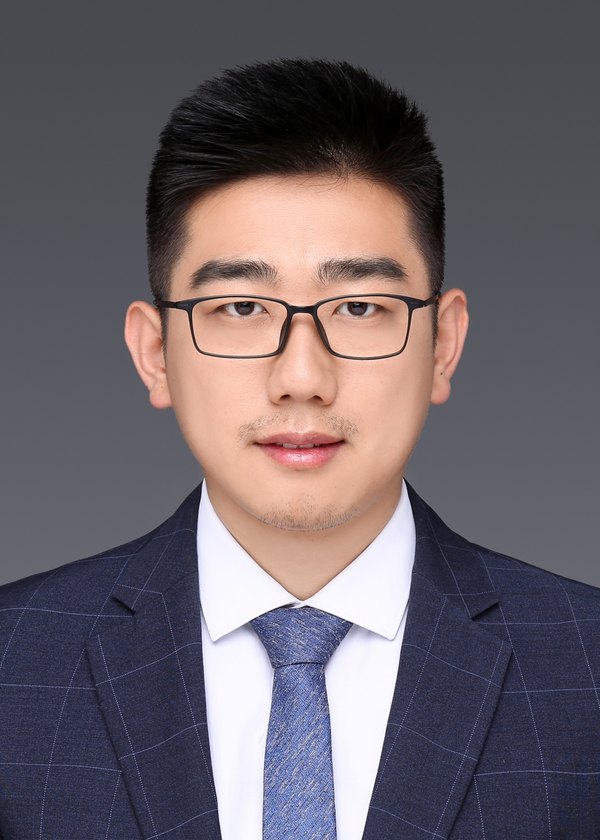
Head of AI Department, SDIC Cloud-Tech | MBA Candidate, Tsinghua-Cornell Dual Degree Finance MBA
I have worked for twelve years: the first half in finance and accounting, the second half in enterprise systems and AI, and most of that time leading teams. I am now Head of the AI Department at SDIC Cloud-Tech, part of SDIC, a central state-owned investment group in China. When I joined in 2024 the group had no AI program. I built the department from zero and led the writing of the group's AI three-year plan. Since then my team has shipped more than a hundred enterprise agents, used by well over ten thousand employees across dozens of departments.
In the projects I have led, the hard part was rarely the technology. It was the number of people and organizations involved, none of whom reported to each other. At SDIC I manage both my own engineers and external delivery teams, I am one of the overall leads of the group's AI investment research agent, and I negotiated the company's strategic partnerships with local governments, universities and cloud providers. In my previous job I was the overall delivery lead who coordinated seven vendors to put a new accounting standards system into production for the world's largest monocrystalline silicon manufacturer. At Deloitte I organized a group-level expert panel and rolled out new accounting standards across the 31 provincial companies and 30+ subsidiaries of one of China's largest telecom operators. The project was commended in a firm-wide email from a global leadership partner, and I was promoted to Manager ahead of schedule.
I learned both finance and technology by doing the work. I spent five years at Deloitte in audit and complex financial advisory, then moved into system architecture and designed a financial forecasting system that runs on more than a billion records. What I do now is get agents into real production use. I still write and deploy things myself. I believe in "build one first" and in talent density, and I do not believe in path dependence.
What I want to work on next is where AI meets finance. My view is that agents will soon be able to take on real research and decision work, and when that happens the way investing is done will change. That is why I enrolled in the dual degree Finance MBA of Tsinghua University PBC School of Finance and Cornell University's Johnson School of Management. My bachelor's degree is in financial management, with a minor in finance, from Dongbei University of Finance and Economics.
国投云网 人工智能部负责人 | 清华-康奈尔双学位金融 MBA 在读
我工作了十二年,前一半在金融和财务,后一半在企业系统和 AI,大部分时间都在带团队。现在是国投云网人工智能部负责人。2024 年我进国投的时候,集团还没有 AI 体系。部门是我从零建起来的,集团 AI 三年规划是我牵头写的,到现在团队交付了上百个企业智能体,数十个部门、上万名员工在用。
我带过的项目,难点基本都不在技术,在于人多、单位多,而且谁也不归谁管。在国投,我同时管自己的研发团队和外协团队,是集团 AI 投研智能体的总负责人之一,公司和地方政府、高校、云厂商的战略合作也是我去谈下来的。上一份工作,我作为总负责人协调 7 家供应商,把全球最大单晶硅制造商的新准则系统落了地。在德勤,我组织集团级专家组,把新会计准则推到一家大型通信运营商的 31 家省公司和 30 多家子公司,项目拿到了德勤全球领导合伙人的全员信表扬,我也因此跳级升了经理。
财务和技术我都是自己干出来的。在德勤做了五年审计和复杂财务咨询,后来转做系统架构,自己设计过跑在十亿级数据上的财务预测系统,现在做的是把智能体真正送上生产环境。到现在我还是自己动手写、自己部署。我相信"先要有一个",追求人才密度,不信路径依赖。
接下来我想做的是 AI 和金融交叉的事。我的判断是,智能体很快就能承担真实的研究和决策工作,到那时候投资的做法会变。所以我来读了清华大学五道口金融学院和康奈尔大学约翰逊管理学院的双学位金融 MBA。本科是东北财经大学,主修财务管理,辅修金融学。
Email:邮箱: yangtiger2023@gmail.com
Education教育背景
- Founded the library's student management committee and grew it from a dozen people to around a hundred, the third largest on campus. Set up an outreach team that made it financially independent; its "book drifting" program became the first student activity to receive university funding.
- 创办图书馆学生管理委员会,从十几人做到百人规模 (全校第三)。建外联部实现财务独立,"图书漂流"成为首个获校方经费的社团活动。
Experience工作经历
- Group AI program, from scratch. Led the drafting of the group's AI three-year plan and policy documents; delivered enterprise agents now used by business units across the group; built the department and its R&D framework.
- AI investment research agent. One of the overall leads. Covers the investment lifecycle from sourcing to exit, with model routing tiered by data sensitivity and graph-based, multi-node generation of industry research reports. Led the hands-on model selection benchmarks.
- Digital-employee product line. Led successive generations of the product, with autonomous planning built on LangGraph; co-built a power-sector policy analysis agent with a sister company.
- Investment analysis and partnerships. Financial modeling and ROI analysis for intelligent computing centers; industry-academia partnerships with universities and cloud providers; taught AI to the group's management trainees and presented the company's AI work in English to foreign-invested enterprises.
- 从零搭建集团 AI 体系。主导集团 AI 三年规划与政策文件起草;交付的企业智能体在集团各业务单位落地使用;组建部门和研发体系。
- AI 投研智能体。总负责人之一。覆盖从寻源到退出的投资全流程,设计按数据敏感度分级的模型路由,基于图编排实现多节点行业研报自动生成,主导模型选型实测。
- 数字人产品线。主导产品的多代迭代,基于 LangGraph 实现自主规划;与兄弟公司共建电力政策分析智能体。
- 投资测算与产学研合作。智算中心投资测算与 ROI 建模;与高校和云厂商建立产学研合作;为集团管培生讲授人工智能课程,以全英文向外资企业介绍公司 AI 进展。
- An AI-application startup that did not work out. What I took away: alone you go fast, together you go far - one person can rarely move a high-value use case.
- Filled in the AI stack systematically during this period, which later gave me the confidence to take on AI at group scale.
- AI 应用方向的一次创业,没有做成。学到的是"独行者快,众行者远":个人很难撬动高价值场景。
- 系统补齐了 AI 技术栈,是后来敢接集团级 AI 工作的底气。
- Budgeting and forecasting system for China's largest internet long-term apartment rental platform. Served as both the accounting-standards expert and the overall delivery lead; led some 600,000 words of design documentation.
- Data architecture. Chose ClickHouse to support analysis of nearly one million housing units, and wrote the asynchronous migration program that moved over a billion records from sharded MySQL into it.
- New accounting standards system for the world's largest monocrystalline silicon manufacturer. Overall delivery lead, coordinating seven vendors to settle subsystem boundaries and interface specifications.
- 预算与财务预测系统,客户为国内最大的互联网长租公寓平台。同时担任新准则切换财务专家和系统落地总负责人,主导 60 万字设计文档。
- 数据架构。选型 ClickHouse 支撑近百万房源分析,自研 MySQL 分库分表到 ClickHouse 的 10 亿级异步迁移程序。
- 新准则系统落地,客户为全球最大单晶硅制造商。担任总负责人,协调 7 家供应商明确子系统边界与接口规范。
- New accounting standards implementation for one of China's largest telecom operators, spanning 31 provincial companies and 30+ subsidiaries. Independently built the transition-period impact estimation tool.
- Commendation and promotion. The project was commended in a firm-wide email from a global leadership partner, and I was promoted to Manager ahead of schedule.
- Financial due diligence. On-site lead for several pre-investment due diligence and five-year financial modeling engagements in healthcare.
- 新准则落地,客户为国内某大型通信运营商 (31 家省公司 + 30 余家子公司)。独立开发过渡期影响测算工具。
- 表扬和晋升。项目获德勤全球领导合伙人全员信表扬,我跳级升了经理。
- 财务尽调。多个医疗健康领域投前财务尽调与五年财务建模项目的现场负责人。
Building折腾的东西
Things I build on my own time. 工作之外自己做的东西。
Turns a PS5 controller into a push-to-talk input device for macOS. The light bar and haptics show what my coding agent is doing in real time. Open source, a menu bar app I wrote myself.
把 PS5 手柄改成 macOS 上的按键说话输入设备,灯条和震动实时显示编程智能体的运行状态。开源,自己写的 menu bar app。
A DGX Spark and two Mac minis at home. An open-weight LLM with a 256K context runs around the clock, and speech recognition, TTS and embedding all run locally. I operate it to production standards: a dozen always-on services, 38 runbooks, and a post-mortem for every incident.
家里一台 DGX Spark 加两台 Mac mini,常驻 256K 上下文的开源大模型,语音识别、TTS 和 embedding 都在本地跑。按生产环境的标准运维:十余个常驻服务,38 篇 runbook,每次事故都写复盘。
My notes from teaching myself quantitative investing. 136 notes in six months, 11 of them original pieces, including an overfitting checklist and a hand-computed NVDA DCF report.
自己学量化的笔记库。半年 136 篇,其中 11 篇原创,包括过拟合检查清单和一份手算的 NVDA DCF 研报。
Views我的观点
Three judgments behind what I am building now and how I build it. 下面三个判断,决定了我现在做什么、怎么做。
Space stations, airplanes, high-speed trains and bicycles are all "transportation", yet their controls have nothing in common. After the chat box, agents will split into different species by responsibility and setting. The investment research agent I work on runs a fixed multi-node graph and makes hundreds of tool calls per task. It is no longer the same kind of thing as a chat product.
航天站、飞机、高铁、自行车都叫交通工具,操作界面完全不同。聊天框之后,agent 会按责任和场景分化成不同物种。我做的投研智能体,一次任务跑固定的多节点图,调用几百次工具,它和对话产品已经不是一个东西。
They buy and scan books by the million, pay hundreds of PhDs to write and review questions, and stand on fifty years of protein structure data. The stock is finite, and once the public part is collected, the unpublished part is next. Your product is a transition, your data is the raw material, and your business is a model company's next use case. The urgent job for an enterprise is not buying models. It is building up what it owns.
成百万册地买书扫描,请几百位博士出题复核,站在五十年的蛋白质结构数据上。存量有限,公开的收完就收没公开的:你的产品是过渡,你的数据是原料,你的生意是模型公司的下一个场景。企业当务之急不是买模型,是攒家底。
A faster agent makes mistakes faster, a broader one spreads damage wider, a stronger one breaks more. Driving takes a license and electrical work takes a certificate, yet picking up AI requires no paperwork at all. Technology cannot solve the problems it creates; this is a governance question. So every digital twin I design has a real employee behind it who confirms and is accountable.
智能体更快意味着犯错更快,更广意味着损害面更广,更强意味着破坏力更强;开车要驾照,电工要证,拿到 AI 却不需要任何手续。技术解决不了自己带来的问题,这是治理问题。所以我设计的每个数字分身背后都有一个真实员工确认和负责。